

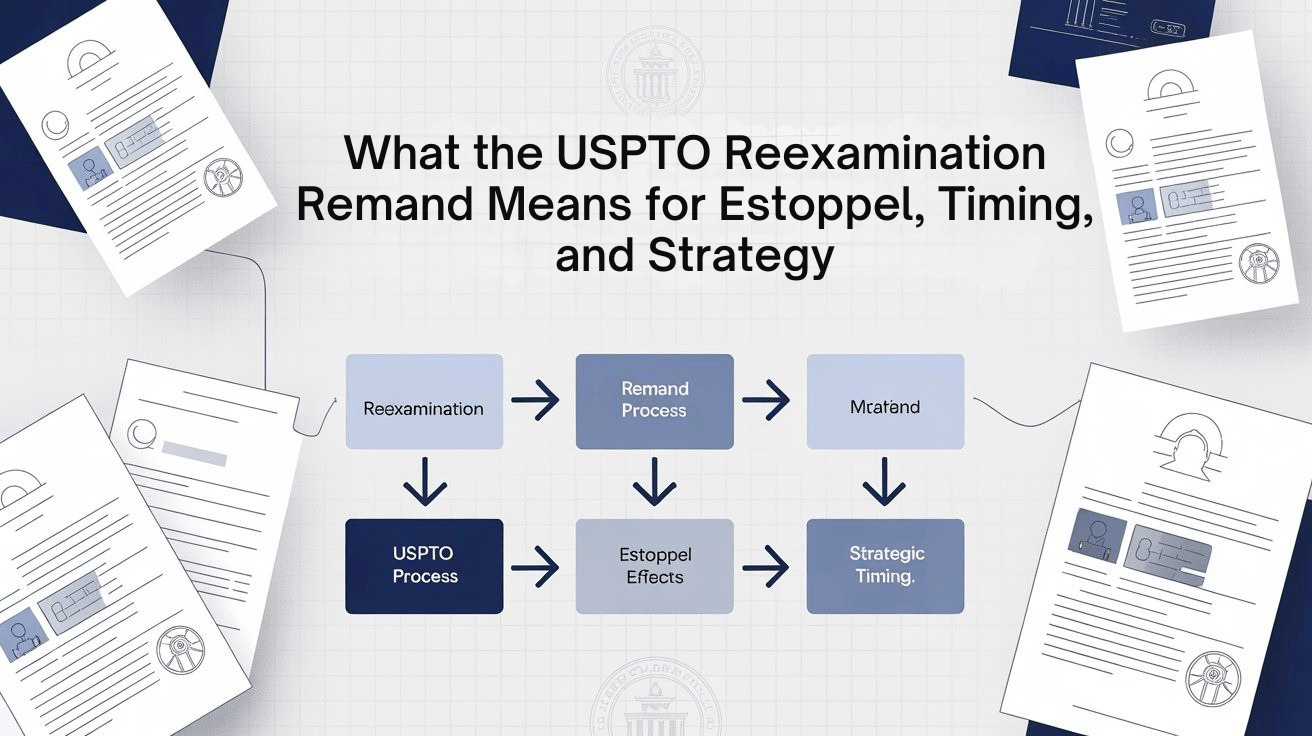
Patent law rarely stands still. Every new procedural shift or administrative decision has ripple effects across litigation strategy, patent enforcement, and competitive positioning. One such development gaining attention is the USPTO Reexamination Remand, which is prompting companies and legal teams to rethink how they approach patent challenges.
While the term may sound procedural, its implications are highly practical. It affects when and how patent challenges can be filed, what arguments can be reused, and how parties should plan their next move. In short, it changes the strategic playbook.
For businesses that depend on intellectual property whether for protection, licensing, or competitive leverage this development is not something to overlook.
What Is a USPTO Reexamination Remand?
A USPTO Reexamination Remand occurs when a patent matter is sent back for further review under reexamination procedures after prior consideration in another forum, such as post-grant proceedings. It essentially reopens questions around patent validity but under a different procedural lens.
Reexamination itself is not new. It has long served as a mechanism to reassess patents based on prior art. However, what makes the current situation notable is how this remand intersects with modern post-grant practices like inter partes review.
This intersection is where complexity and opportunity emerges.
Why This Development Is Significant
The significance of the USPTO Reexamination Remand lies in how it reshapes expectations around finality and fairness. For years, patent disputes have involved multiple layers of review, often running in parallel or sequence.
This has created both flexibility and uncertainty.
On one hand, challengers benefit from multiple avenues to question a patent. On the other, patent owners face prolonged disputes that can stretch resources and delay certainty.
The recent remand development appears to recalibrate this balance by introducing practical limits on how and when reexamination can be used.
Estoppel: Redefining the Boundaries
Understanding Estoppel in Patent Proceedings
Estoppel prevents a party from raising arguments that were or reasonably could have been raised in earlier proceedings. It is designed to ensure efficiency and prevent repetitive litigation.
However, in practice, estoppel has often been tested.
Some challengers have attempted to navigate around estoppel restrictions by shifting arguments between different forums. For example, if a particular claim fails in one proceeding, they may try a different route to challenge it again.
How the Remand Changes the Landscape
The USPTO Reexamination Remand tightens this flexibility.
It signals a move toward reinforcing consistency across proceedings. While it does not eliminate reexamination as an option, it makes it more difficult to use as a workaround after another process has concluded.
This means:
- Fewer opportunities to recycle arguments
- Stronger emphasis on presenting complete cases upfront
- Increased importance of strategic planning before initiating any proceeding
What This Means for Businesses
For companies, this change demands discipline.
Legal teams must now assume that their first major challenge may also be their most important one. There is less room for trial-and-error approaches and more pressure to get it right the first time.
Timing: The New Critical Factor
From Flexible to Fixed
Timing has always been important in patent disputes, but the USPTO Reexamination Remand elevates it to a central concern.
Previously, some parties waited to see how proceedings unfolded before deciding whether to pursue reexamination. This “wait-and-watch” approach allowed for adaptive strategies.
Now, that flexibility is shrinking.
The Risk of Waiting Too Long
Delays can now close doors.
If reexamination is not initiated at the right stage, it may no longer be available as a viable option. This creates a narrower decision window and increases the stakes of early actions.
Early Action Becomes Essential
Organizations must now:
- Conduct prior art searches earlier
- Evaluate patent strength at the outset
- Align legal and business goals from the beginning
Timing is no longer just a tactical element, it is a strategic foundation.
Strategy: A Shift Toward Proactive Planning
Moving Away from Reactive Approaches
The traditional approach to patent challenges often involved adapting strategy based on how proceedings evolved. While still relevant, this approach is becoming less effective under the new framework.
The USPTO Reexamination Remand encourages a more proactive mindset.
Integrated Decision-Making
Instead of treating each proceeding as a separate step, companies must now think holistically.
Questions to consider include:
- Which forum offers the best chance of success?
- What arguments should be prioritized?
- How will one proceeding affect another?
This integrated approach reduces surprises and improves outcomes.
Resource Allocation Matters
Strategic planning also involves resource management.
With fewer opportunities to revisit arguments, companies must invest more upfront in:
- Research
- Analysis
- Documentation
This may increase initial costs but can significantly reduce long-term risk.
Implications for Patent Challengers
For those seeking to challenge patents, the message is clear: preparation is everything.
Stronger Foundations Are Required
Challengers must:
- Identify robust prior art early
- Develop comprehensive arguments
- Anticipate counterarguments
Fewer Second Chances
The days of relying on fallback options are fading.
Each action must be taken with the understanding that it could define the entire case.
Smarter Forum Selection
Choosing between different USPTO proceedings is no longer just about preference, it is about long term impact.
Each option carries consequences that must be carefully evaluated.
Implications for Patent Owners
Patent owners also experience a shift in dynamics.
Increased Stability
With reduced opportunities for repeated challenges, patent owners gain a stronger sense of stability.
This can:
- Enhance confidence in patent enforcement
- Improve licensing negotiations
- Reduce prolonged legal uncertainty
The Need for Vigilance
However, stability does not mean complacency.
Patent owners must:
- Monitor potential challenges closely
- Strengthen patent claims proactively
- Prepare for coordinated defense strategies
Leveraging Early Opportunities
Early engagement in proceedings can now play a decisive role.
Responding effectively at initial stages can shape outcomes and limit further challenges.
The Role of High-Quality IP Support
As complexity increases, so does the need for expert support.
Accurate research, detailed analysis, and precise documentation are no longer optional—they are essential.
This is where professional IP services make a difference.
IP Brigade provides end-to-end intellectual property solutions, including:
- Novelty Search
- Patent Invalidity Search
- Freedom to Operate Search
- Patentability Search
- Utility Patent Drawings
- Design Patent Drawings
These services help organizations build stronger cases, avoid risks, and make informed decisions at every stage of the patent lifecycle.
Looking Ahead: What to Expect
The USPTO Reexamination Remand is likely part of a broader trend toward refining patent procedures.
Future developments may continue to:
- Clarify estoppel boundaries
- Define procedural timelines more strictly
- Encourage efficient dispute resolution
For businesses, this means staying informed and adaptable.
Those who understand these changes early will have a clear advantage.
Key Takeaways
- The USPTO Reexamination Remand limits flexibility in using reexamination after other proceedings
- Estoppel is becoming more influential in shaping outcomes
- Timing is now a critical factor in determining available options
- Strategic planning must begin earlier and be more comprehensive
- Both challengers and patent owners must adapt to a more structured environment
Conclusion
The evolving patent landscape demands more than technical expertise it requires strategic foresight.
The USPTO Reexamination Remand highlights the importance of timing, consistency, and preparation. It shifts the focus from reactive tactics to proactive planning, where every decision carries greater weight.
For companies navigating patent disputes, success will depend on how well they adapt to these changes.
In a world where patent strategy is becoming more complex, having the right partner can make all the difference.
IP Brigade combines technical expertise with strategic insight to help you stay ahead of challenges and protect your innovations effectively.
Connect with IP Brigade today and take control of your patent strategy with confidence.