

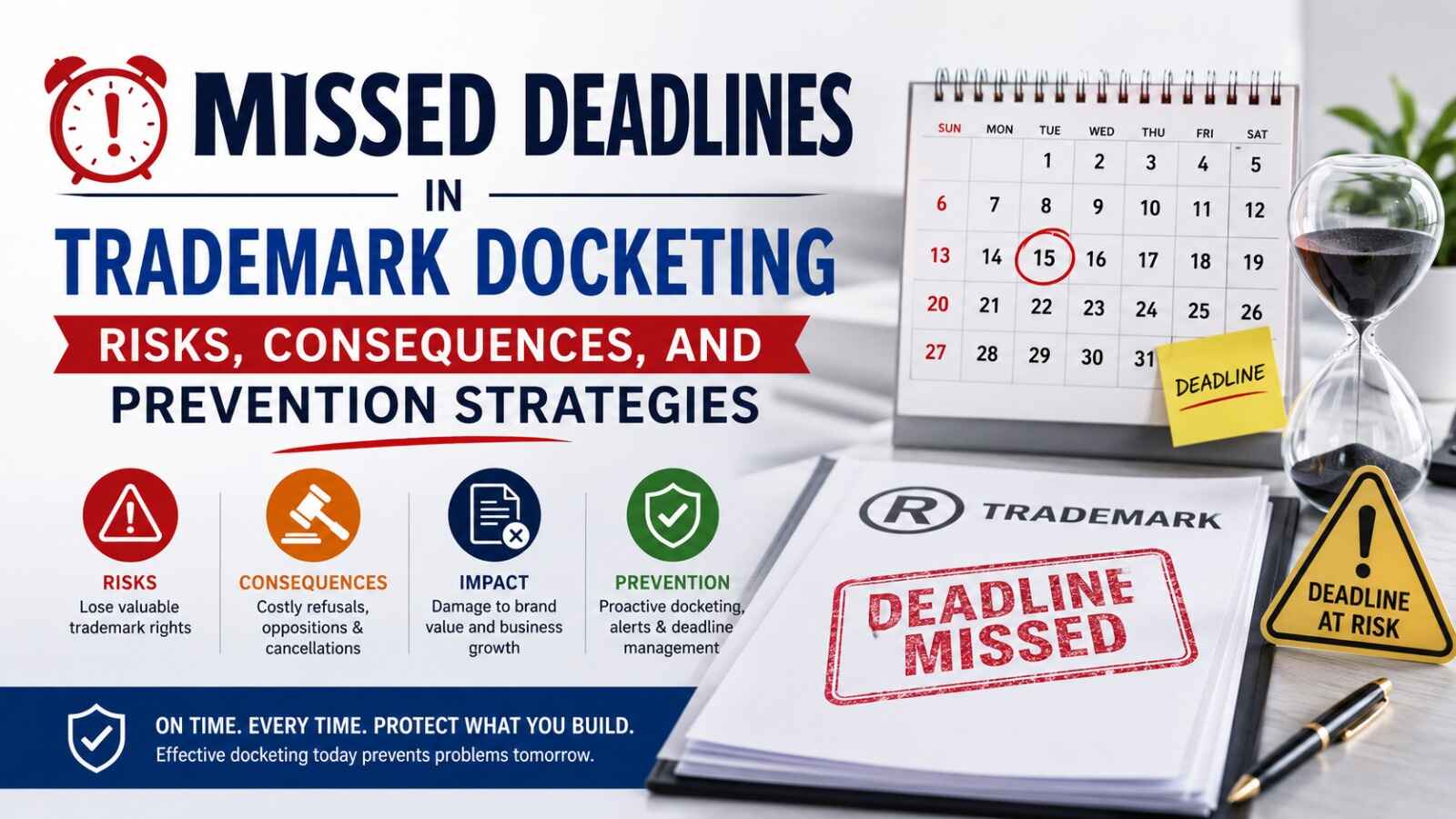
Trademark protection is one of the most valuable investments a business can make. A trademark distinguishes products and services, builds customer trust, and protects brand identity in competitive markets. However, maintaining trademark rights requires strict compliance with filing and renewal deadlines. When important dates are overlooked, businesses may face serious legal and financial consequences. This is why understanding Missed Deadlines in Trademark Docketing is essential for every trademark owner.
Trademark docketing is the process of tracking and managing all important dates associated with trademark applications, registrations, renewals, and legal proceedings. A well-managed docketing system ensures that deadlines are met on time and trademark rights remain protected. On the other hand, Missed Deadlines in Trademark Docketing can result in abandoned applications, canceled registrations, increased costs, and loss of valuable intellectual property rights.
In this article, we will explore the importance of trademark docketing, the risks associated with missed deadlines, and the best practices businesses can adopt to protect their trademarks effectively.
What Is Trademark Docketing?
Trademark docketing refers to the systematic monitoring and management of trademark-related deadlines throughout the lifecycle of a trademark. Every trademark application and registration is associated with multiple deadlines that must be met to maintain legal protection.
Trademark docketing typically includes tracking:
- Application filing dates
- Office Action response deadlines
- Statement of Use deadlines
- Opposition and cancellation deadlines
- Renewal and maintenance filing dates
- International trademark deadlines
- Ownership and assignment updates
The primary objective of trademark docketing is to ensure that no critical deadline is missed and that trademark rights remain active and enforceable.
Understanding Missed Deadlines in Trademark Docketing
Missed Deadlines in Trademark Docketing occur when a trademark owner, attorney, or organization fails to complete a required action within the prescribed timeframe established by a trademark office.
These missed deadlines may involve:
- Failure to respond to an Office Action
- Missing a trademark renewal deadline
- Delayed submission of required documents
- Failure to file Statements of Use
- Missing opposition or cancellation response dates
Regardless of the reason, Missed Deadlines in Trademark Docketing can create significant challenges that may affect the strength and validity of trademark rights.
Why Trademark Deadlines Matter
Trademark offices establish deadlines to ensure efficient processing of applications and maintenance of registrations. Missing these deadlines often results in automatic penalties that can be difficult and expensive to reverse.
Timely compliance helps businesses:
- Maintain trademark protection
- Avoid application abandonment
- Preserve registration rights
- Prevent legal disputes
- Reduce administrative costs
Because trademarks are valuable business assets, every deadline must be treated as a priority.
Common Causes of Missed Deadlines in Trademark Docketing
Human Error
One of the most common causes of Missed Deadlines in Trademark Docketing is simple human oversight. Even experienced professionals can overlook deadlines when managing large trademark portfolios.
Manual Tracking Systems
Many organizations still rely on spreadsheets, calendars, and email reminders to track trademark deadlines. These methods can become unreliable as portfolios grow and deadlines increase.
Poor Communication
Trademark management often involves multiple stakeholders, including attorneys, paralegals, docketing teams, and business owners. Poor communication between these parties can result in important deadlines being missed.
Inaccurate Data Entry
Incorrect filing dates, renewal dates, or jurisdictional information can lead to scheduling errors and missed deadlines.
Lack of Dedicated Resources
Companies without dedicated intellectual property management teams often struggle to keep track of numerous trademark deadlines, increasing the likelihood of Missed Deadlines in Trademark Docketing.
Consequences of Missed Deadlines in Trademark Docketing
Application Abandonment
One of the most immediate consequences of Missed Deadlines in Trademark Docketing is trademark application abandonment.
For example, if an applicant fails to respond to an Office Action within the designated timeframe, the application may be considered abandoned, requiring additional effort and expense to restore or refile.
Loss of Trademark Rights
Missing renewal or maintenance deadlines can result in cancellation of trademark registrations. Once a trademark registration is canceled, competitors may attempt to register similar marks, weakening brand protection.
Increased Legal Costs
Correcting errors caused by Missed Deadlines in Trademark Docketing often involves:
- Filing petitions for reinstatement
- Paying additional government fees
- Attorney representation
- Administrative corrections
These expenses can quickly exceed the cost of proactive docket management.
Brand Protection Risks
Without active trademark protection, businesses become vulnerable to infringement and marketplace confusion. Competitors may capitalize on lapses in trademark protection to gain a competitive advantage.
Business Disruption
Trademark-related issues can delay:
- Product launches
- Marketing campaigns
- Licensing agreements
- Business expansion plans
This disruption can negatively impact revenue and long term business growth.
Trademark Deadlines That Are Commonly Missed
Office Action Responses
Trademark examiners often issue Office Actions requesting clarification or additional information. Missing response deadlines can lead to abandonment of the application.
Statement of Use Filings
Intent-to-use trademark applications require applicants to prove commercial use of the mark within specific deadlines. Failure to file the Statement of Use may result in loss of application rights.
Trademark Renewals
Registered trademarks require periodic renewal to maintain protection. Missing renewal deadlines is one of the most common examples of Missed Deadlines in Trademark Docketing.
Opposition Proceedings
Trademark owners may need to respond to oppositions or cancellation proceedings within strict deadlines. Missing these deadlines can significantly affect legal outcomes.
International Filing Deadlines
Managing global trademark portfolios involves tracking different deadlines across multiple jurisdictions. This complexity increases the risk of missed deadlines if not managed effectively.
How Businesses Can Prevent Missed Deadlines in Trademark Docketing
Use Automated Docketing Software
Modern docketing systems automate deadline tracking and generate reminders well before due dates.
Benefits include:
- Automatic deadline calculations
- Multiple reminder notifications
- Centralized record management
- Reduced human error
Automation significantly reduces the risk of Missed Deadlines in Trademark Docketing.
Create Multiple Reminder Systems
Businesses should establish layered reminder schedules, such as:
- 90-day reminders
- 60-day reminders
- 30-day reminders
- Final deadline alerts
Multiple reminders provide additional protection against oversight.
Conduct Regular Docket Audits
Routine audits help identify inaccuracies and ensure all deadlines are correctly recorded.
Audits also help organizations maintain accurate trademark records and reduce compliance risks.
Centralize Trademark Information
Keeping all trademark data in a centralized system improves visibility and accessibility across teams.
Centralized management reduces confusion and improves deadline monitoring.
Assign Responsibility
Every trademark deadline should have a designated individual responsible for monitoring and completing required actions.
Clear accountability reduces the likelihood of missed deadlines.
The Importance of Professional Trademark Docketing Services
Many businesses choose to outsource docketing functions to experienced intellectual property professionals.
Professional trademark docketing services provide:
- Deadline tracking
- Renewal monitoring
- Portfolio management
- International trademark support
- Compliance monitoring
- Reporting and documentation
By working with experienced professionals, businesses can significantly reduce the risk of Missed Deadlines in Trademark Docketing while improving overall trademark management efficiency.
The Role of Technology in Trademark Docketing
Technology continues to transform intellectual property management.
Advanced trademark docketing systems now offer:
- Cloud-based access
- Real-time updates
- Automated deadline calculations
- Portfolio analytics
- Integrated reporting tools
- International deadline synchronization
These technological advancements help businesses maintain compliance and reduce administrative burdens.
As trademark portfolios become increasingly global, technology-driven docketing solutions are becoming essential for effective trademark management.
Why Choose IP Brigade?
Managing trademarks requires accuracy, consistency, and attention to detail. At IP Brigade, we understand the challenges businesses face when tracking critical intellectual property deadlines.
Our experienced team helps clients reduce the risks associated with Missed Deadlines in Trademark Docketing through professional IP support services and reliable intellectual property solutions.
We are committed to helping innovators, law firms, and businesses protect their valuable intellectual property assets while maintaining compliance with trademark requirements.
Conclusion
Trademark protection does not end after registration. Maintaining trademark rights requires ongoing attention to filing, renewal, and compliance deadlines. Unfortunately, Missed Deadlines in Trademark Docketing remain a common issue that can result in abandoned applications, canceled registrations, increased legal costs, and weakened brand protection.
By implementing automated systems, conducting regular audits, maintaining centralized records, and partnering with experienced intellectual property professionals, businesses can significantly reduce these risks.
A strong trademark docketing strategy protects valuable brand assets, supports business growth, and ensures long-term intellectual property success.
Partner with IP Brigade for Complete IP Support
In addition to trademark support services, IP Brigade provides comprehensive intellectual property solutions, including:
- Novelty Search
- Freedom to Operate Search
- Patent Invalidity Search
- Patentability Search
- Patent Landscape Studies
- Chemical Structure-based Search
- Patent Drawings
Whether you need patent research, prior art analysis, competitive intelligence, or professional patent drawings, IP Brigade delivers reliable and cost-effective solutions tailored to your intellectual property needs. Contact IP Brigade today and strengthen your IP strategy with confidence.