
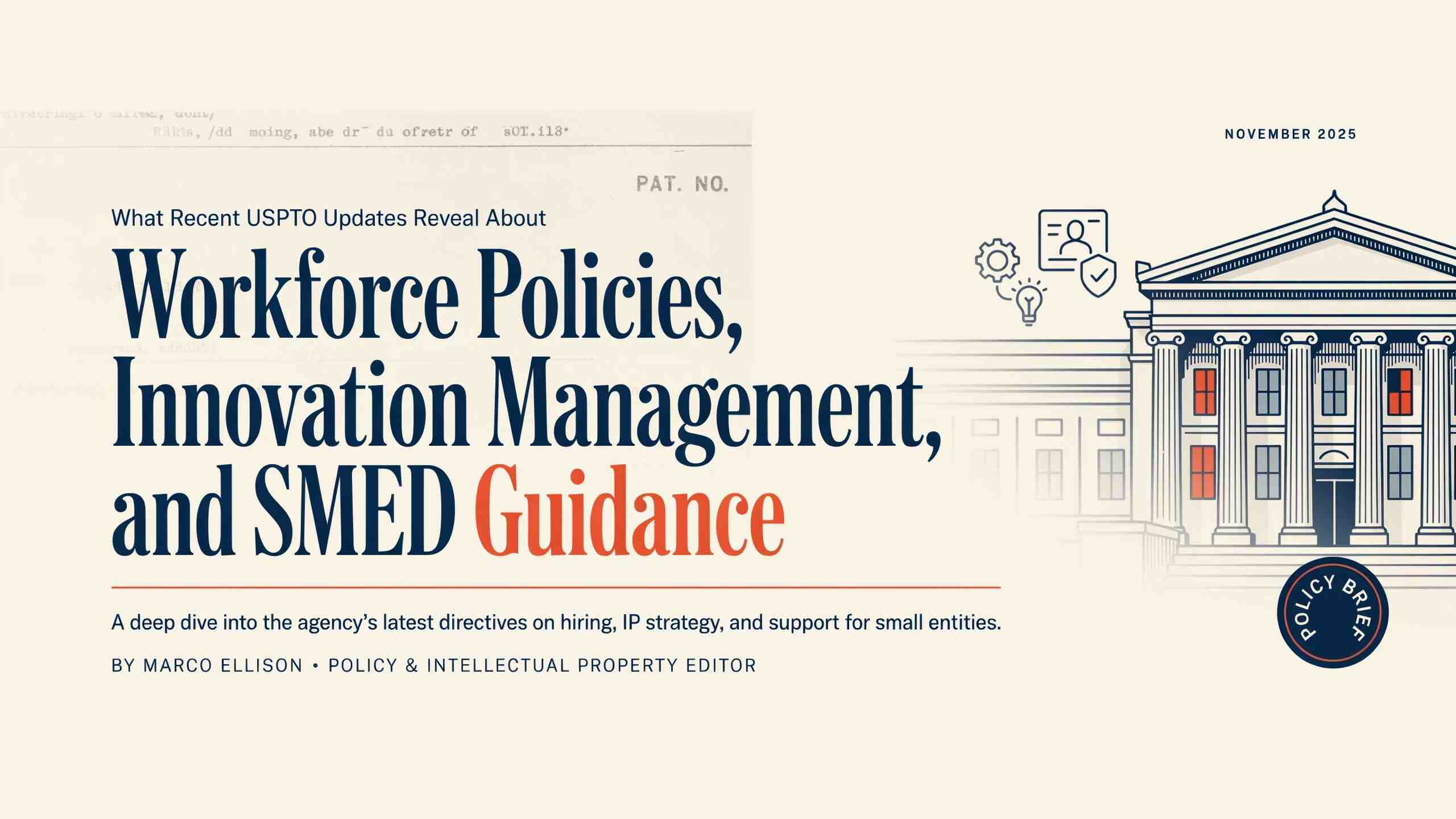
Recent USPTO Updates have attracted significant attention across the intellectual property community after an arbitrator ruled that the United States Patent and Trademark Office (USPTO) violated federal labor law when it eliminated telework opportunities for certain non-patent employees without engaging in proper bargaining with employee representatives. This decision has sparked discussions about workplace policies, operational efficiency, and the future of innovation-related government services.
For inventors, patent professionals, businesses, and intellectual property stakeholders, understanding major USPTO Updates is essential because policy changes within the agency can influence patent examination procedures, communication timelines, and overall patent administration. At the same time, developments related to SMED Guidance continue to shape conversations around USPTO management practices and operational improvements.
In this article, we explore the ruling, its implications, and why staying informed about USPTO Updates and SMED Guidance is crucial for businesses seeking strong intellectual property protection.
Understanding the Arbitrator’s Decision
The dispute arose when the USPTO modified telework arrangements for certain non-patent employees. Employee representatives argued that the agency implemented the changes without fulfilling its obligation to negotiate with the union before making substantial workplace modifications.
Following review, the arbitrator determined that the USPTO violated federal labor law by implementing the telework changes without adequate bargaining. The ruling emphasizes the importance of following established labor-management procedures before introducing significant workplace policy changes.
This decision has become one of the most discussed USPTO Updates in recent months because it highlights the balance between agency management authority and employee rights. It also demonstrates how administrative decisions can create broader operational and organizational consequences.
Why This Ruling Matters
The intellectual property ecosystem depends heavily on efficient government operations. Any major administrative changes at the USPTO can potentially affect workflow, employee productivity, and service delivery.
The ruling underscores several key considerations:
- Compliance with federal labor regulations
- Transparency in agency decision-making
- Employee engagement during organizational changes
- Operational continuity within the USPTO
- Long-term workforce management strategies
As more USPTO Updates emerge regarding workforce policies, industry professionals are paying close attention to how these developments may influence patent and trademark services.
The Growing Importance of SMED Guidance
Discussions surrounding this case have also renewed interest in SMED Guidance and related management initiatives. SMED Guidance is frequently referenced in conversations about organizational efficiency, workforce management, and operational improvements within government agencies.
As agencies seek to optimize resources while maintaining service quality, SMED Guidance provides a framework for evaluating procedural changes and improving organizational effectiveness.
Many observers believe that future USPTO Updates may continue to reference operational strategies connected to SMED Guidance as the agency balances modernization efforts with workforce considerations.
The relevance of SMED Guidance extends beyond internal management. Businesses, patent practitioners, and intellectual property professionals benefit when agency processes become more efficient and predictable.
Impact on Patent Applicants and Businesses
Although the ruling specifically addresses non-patent employees, stakeholders throughout the innovation community should monitor these developments carefully.
Several potential implications include:
1. Administrative Stability
Significant workforce changes can affect agency operations. Monitoring USPTO Updates helps applicants understand broader administrative trends that may influence patent processing environments.
2. Improved Transparency
The decision reinforces accountability within federal agencies. Transparent decision-making often leads to more predictable outcomes for stakeholders.
3. Future Policy Adjustments
As the USPTO responds to the ruling, additional USPTO Updates may introduce revised procedures, workforce policies, or operational frameworks.
4. Continued Focus on Efficiency
The emphasis on SMED Guidance reflects ongoing efforts to improve organizational performance while maintaining service quality.
How USPTO Updates Influence Intellectual Property Strategy
Businesses often focus exclusively on patent filings and prosecution activities. However, broader USPTO Updates can also affect intellectual property strategy.
Changes involving agency operations, workforce policies, examination procedures, and administrative initiatives may influence:
- Filing timelines
- Communication practices
- Examination efficiency
- Resource allocation
- Patent prosecution planning
Organizations that closely monitor USPTO Updates are better positioned to adapt their intellectual property strategies proactively.
Similarly, developments involving SMED Guidance may provide insights into future operational enhancements that could affect patent related services.
Learning from International Intellectual Property Offices
The USPTO is not the only intellectual property authority implementing modernization initiatives.
Patent professionals frequently monitor developments from major organizations such as:
These organizations continually evaluate operational efficiency, workforce management, digital transformation, and service delivery improvements.
Comparing international approaches helps businesses understand emerging trends that may eventually influence future USPTO Updates and applications of SMED Guidance.
Why Professional Patent Support Matters More Than Ever
As regulatory developments continue to shape the intellectual property landscape, businesses need experienced partners capable of navigating evolving requirements.
At IP Brigade, we help innovators, startups, research organizations, and enterprises protect their intellectual property through comprehensive patent support services.
Whether you are responding to examination challenges or evaluating competitive patent landscapes, professional guidance can significantly improve decision-making and reduce risk.
IP Brigade Services for Comprehensive Intellectual Property Protection
Office Action Response
Receiving an office action from a patent examiner can be challenging. IP Brigade provides strategic Office Action Response support to help applicants address examiner concerns effectively and improve prosecution outcomes.
Novelty Search
Before filing a patent application, conducting a thorough Novelty Search helps identify existing prior art and assess invention uniqueness.
Freedom to Operate Search
A Freedom to Operate Search evaluates potential infringement risks before commercialization, helping businesses enter markets with greater confidence.
Patent Invalidity Search
IP Brigade’s Patent Invalidity Search services help identify prior art that may challenge the validity of existing patents.
Patentability Search
A comprehensive Patentability Search provides valuable insights into whether an invention is likely to meet patentability requirements.
Patent Landscape Studies
Strategic Patent Landscape Studies help organizations understand technology trends, competitor activities, and innovation opportunities.
Chemical Structure-based Search
For pharmaceutical, biotechnology, and chemical industries, our Chemical Structure based Search services deliver highly specialized intellectual property intelligence.
Patent Drawings
Accurate and compliant Patent Drawings are essential for successful patent applications. IP Brigade provides professional patent illustration services that meet international filing standards.
Staying Ahead Through Knowledge and Preparation
The recent arbitrator ruling serves as a reminder that organizational decisions within government agencies can have far-reaching implications.
By following important USPTO Updates, businesses gain valuable insights into evolving patent administration practices. Likewise, understanding developments related to SMED Guidance can help stakeholders anticipate operational changes that may influence intellectual property services.
Innovation moves quickly, and intellectual property strategies must evolve accordingly. Organizations that stay informed about USPTO Updates, monitor developments surrounding SMED Guidance, and work with experienced intellectual property professionals are better positioned to protect valuable innovations and maintain competitive advantages.
Conclusion
The arbitrator’s determination that the USPTO violated federal labor law by eliminating certain telework arrangements without bargaining represents one of the more significant USPTO Updates affecting agency operations. While the immediate dispute centers on workforce management, the broader implications extend to organizational governance, transparency, and operational efficiency.
At the same time, ongoing discussions involving SMED Guidance highlight the continued importance of balancing modernization efforts with stakeholder engagement and procedural compliance.
For inventors, startups, and businesses navigating today’s complex intellectual property environment, staying informed about USPTO Updates and developments related to SMED Guidance is essential. Partnering with experienced intellectual property professionals such as IP Brigade ensures that your patent strategy remains strong, informed, and aligned with evolving industry and regulatory developments.
Whether you need an Office Action Response, Novelty Search, Freedom to Operate Search, Patent Invalidity Search, Patentability Search, Patent Landscape Studies, Chemical Structure-based Search, or Patent Drawings, IP Brigade is committed to helping innovators secure and maximize the value of their intellectual property assets.