
For first-time inventors and early-stage startups, the journey from idea to innovation often starts with a simple online search. Many innovators assume that if an idea does not appear on Google, it must be new. Unfortunately, this assumption is one of the most common and costly mistakes in the patent process.
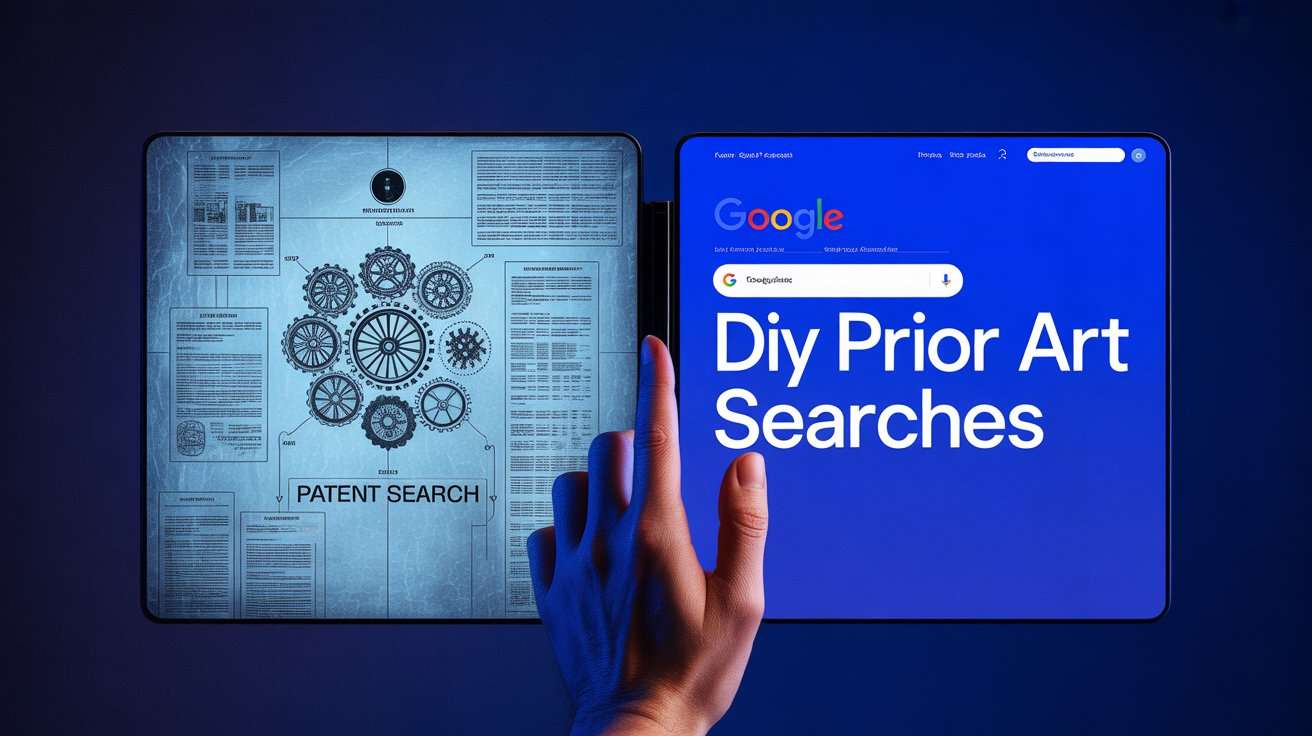
Understanding Patent Search vs Google Search is crucial before filing a patent application, investing in product development, or approaching investors. While Google is a powerful general-purpose tool, it was never designed to assess patentability or identify legally relevant prior art. This blog explores why Patent Search vs Google Search is not a fair comparison and why DIY prior art searches frequently fail.
What Is Prior Art and Why It Determines Patent Success
Prior art includes any information publicly available before the filing date of a patent application. Patent examiners at the United States Patent and Trademark Office (USPTO) and international authorities such as WIPO rely on prior art to determine whether an invention is:
- Novel
- Non-obvious
- Eligible for patent protection
Prior art is not limited to existing products or websites. It includes:
- Published patent applications
- Granted patents
- Research papers and academic journals
- Technical standards
- Conference presentations
- Non-patent literature (NPL)
This distinction marks the core difference between Patent Search vs Google Search.
Patent Search vs Google Search: Two Completely Different Systems
At a fundamental level, Patent Search vs Google Search compares two tools designed for entirely different purposes.
Google Search: Broad, Fast, and Consumer-Oriented
Google prioritizes:
- Popularity and web traffic
- Marketing content
- Commercial websites
- SEO-optimized articles
While Google is excellent for general research, it has major limitations when it comes to evaluating patentability:
- It does not index many patent databases comprehensively
- Unpublished patent applications are inaccessible
- Search results are ranked by popularity, not legal relevance
Google focuses on visibility, not legal significance—a critical distinction in Patent Search vs Google Search.
Patent Search: Structured, Technical, and Legal
Professional patent searches use:
- USPTO and EPO patent databases (EPO)
- WIPO international patent databases (WIPO)
- Classification-based searching
- Examiner-style search strategies
Unlike Google, patent searches uncover hidden, technical, and non-obvious prior art, making them legally relevant for patentability evaluation.
Classification Systems (CPC/IPC): Why DIY Searches Fail
A key reason DIY searches are unreliable lies in patent classification systems.
- CPC (Cooperative Patent Classification) – Used by USPTO and EPO
- IPC (International Patent Classification) – Managed by WIPO
These systems categorize inventions by technical function, rather than commercial names. For example:
- A “wireless charger” might appear under inductive energy transfer
- A “smart wearable” could fall under biometric sensing devices
Examiners search by these classification codes before refining with keywords. Google, however, does not recognize CPC or IPC, creating a fundamental gap between patent search vs Google search results.
Why Keyword-Based Google Searches Miss Critical Prior Art
Patent documents are written in technical, legal language to:
- Avoid commercial terminology
- Cover broad technical concepts
- Describe multiple embodiments and variations
For instance, a consumer-friendly “smart lock” may appear in patent literature as:
“An electromechanical access control apparatus with wireless communication capability”
A Google search using popular keywords is unlikely to identify this, making DIY prior art searches inadequate.
Non-Patent Literature (NPL): A Blind Spot in Google Searches
Examiners often cite non-patent literature (NPL), including:
- IEEE and scientific journals
- University dissertations and theses
- Research lab publications
- Industry white papers
- Technical standards (ISO, ASTM, IEC)
Many NPL sources:
- Are behind paywalls
- Are not indexed by Google
- Lack search engine optimization
Professional patent searches integrate these specialized NPL sources, highlighting another reason why Patent Search vs Google Search cannot be compared.
Language and Regional Publication Gaps
Patents are global. A dangerous assumption is that prior art will always appear in English:
- Many innovations first appear in Chinese, Japanese, Korean, or German
- Some inventions are disclosed only in regional patent offices
- Older patents may use outdated terminology
Databases maintained by USPTO, EPO, and WIPO include classification and translation tools for foreign patents. Google searches, by contrast, often overlook these documents entirely.
The Risks for First-Time Inventors and Startups
First-time inventors often think:
- “I searched Google and found nothing”
- “My idea must be new”
- “I can save money by doing it myself”
In reality, inadequate prior art searches frequently lead to rejected applications, wasted filing fees, and misallocated resources.
Hidden Costs of DIY Prior Art Searches
DIY searches often create false confidence, leading to:
- Filing weak or non-novel applications
- Wasting government fees
- Investing in products that cannot be legally protected
- Overlooking potential infringement risks
In the Patent Search vs Google Search comparison, the cost lies in the decisions made based on incomplete information, not the search itself.
Professional Patent Search Advantages
For startups and innovators, professional patent searches provide strategic advantages:
- Early identification of novelty gaps
- Clear assessment of patentability
- Freedom-to-operate analysis
- Stronger defensible IP portfolios
- Improved valuation for investors
These benefits are unattainable through Google searches alone. Professional searches combine USPTO, EPO, WIPO databases, CPC/IPC classifications, and NPL review to deliver legally relevant results.
How IP Brigade Supports Inventors and Startups
At IP Brigade, we provide comprehensive patent support services, including:
- Novelty Search – Evaluate the uniqueness of your invention
- Freedom to Operate (FTO) Search – Ensure commercialization without infringement
- Patentability Search – Confirm eligibility for patent filing
- Patent Invalidity Search – Identify risks to competitors’ patents
- Patent Landscape Analysis – Understand the broader IP ecosystem
- Chemical Structure-Based Search – Specialized searches for chemical inventions
- Utility and Design Patent Drawings, Trademark Drawings – Professional drawings supporting filings
- Information Disclosure Statement Preparation – Compliance with examiner requirements
Learn more about our services here: IP Brigade Services
By leveraging professional patent search services, innovators can avoid common pitfalls of DIY searches and make informed decisions based on legally relevant prior art.
When Google Search Still Has Value
Google is not useless. It is excellent for:
- Market research
- Competitor identification
- Understanding consumer terminology
- Branding and positioning
However, it should supplement, not replace, a structured patent search. In Patent Search vs Google Search, Google identifies market trends, while professional patent searches identify legally enforceable prior art.
Conclusion: Why DIY Searches Fail
The comparison between Patent Search vs Google Search is not about convenience—it is about legal accuracy, risk management, and protecting innovation. Google surfaces what is visible; patent searches uncover what is legally relevant and hidden.
For first-time inventors and startups, understanding this distinction early can:
- Reduce the risk of rejected patent applications
- Prevent wasted development and filing costs
- Protect innovation in competitive markets
Professional guidance from IP Brigade ensures that your inventions are evaluated with legal rigor, global perspective, and technical precision, combining expert searches with high-quality patent drawings and documentation.